

The commerce ministry is proposing a host of direct and indirect incentives such as deferral of import duties and exemption from export taxes to revamp Special Economic Zones through a new legislation, an official said. In the Union Budget this year, the government proposed to replace the existing law governing Special Economic Zones (SEZs) with a new legislation to enable states to become partners in 'Development of Enterprise and Service Hubs' (DESH). The official said the commerce ministry has sought views of different ministries, including finance, on the new bill.

The Parliamentary Standing Committee on Commerce has observed that a massive shortfall in the budgetary allocation of over Rs 1,900 crore by the finance ministry to the industry department may have an adverse impact on the implementation of infrastructure (infra) projects in 2022-23 (FY23). While the Department for Promotion of Industry and Internal Trade (DPIIT) had sought Rs 10,267 crore from the finance ministry for FY23, it received Rs 8,348-crore allocation. For the National Industrial Corridor Development & Implementation Trust (NICDIT), the finance ministry has allocated Rs 1,500 crore instead of Rs 2,400 crore demanded for the project.

In July 2011, the country had received foreign investment worth $1.10 billion.
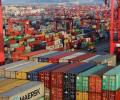
Indian exporters are keeping their fingers crossed on account of rising Covid infections in China and other countries as it could again disrupt supply chains and affect demand for goods. Federation of Indian Export Organisations (FIEO) director general Ajay Sahai said that if the cases continue to increase in the coming days, it may have implications on imports. "We are keeping our fingers crossed," he said.

Singapore continued to be the largest source of FDI in India followed by Mauritius, the US, the Netherlands and Japan.

The government is likely to extend interest subvention for some export-oriented sectors for another year to sustain the current growth in exports. This will be announced during the coming Union Budget for 2011-2012.

The talks for a free trade agreement (FTA) between India and Canada may have taken a pause but will resume once the political row between the two countries is resolved as the pact has economic benefits for both the nations, trade experts and exporters said on Friday. However, they said that India may not hurry for the trade agreement as 60 per cent of New Delhi's exports are already entering Canada at zero duty. Earlier this month, India and Canada paused the negotiations for the agreement due to political reasons.

Says allow companies with up to 49% FDI to invest in restricted sectors.

India is now a biz friendly nations, say Arun Jaitley.
Export oriented units have approached the finance ministry for abolishing "sunset clause" in the Income Tax Act to get tax exemptions beyond March 2009, so as to attract more investments and maintain their competitiveness globally.
Shell gets govt's nod to import petrol, diesel

The central government is expected to complete the auction of the 5.9-million tonne (mt) lithium reserves discovered in the Reasi district of the northern Union Territory (UT) of Jammu & Kashmir (J&K) by the end of this calendar year, Union Mines Secretary Vivek Bharadwaj said on the sidelines of the launch of the Federation of Indian Chambers of Commerce and Industry (Ficci) report on 'New-Age Energy Minerals' on Tuesday. "Auction will be over by the end of this year," said Bharadwaj, adding, "We have already recommended a transaction advisor to the J&K government for the auction of lithium reserves." However, the exact timeline for an auction will be decided by J&K authorities, Union mines minister Pralhad Joshi said in Parliament last month.

The wholesale price-based inflation rose to an eight-month high of 1.48 per cent in October, as manufactured products turned costlier. The WPI inflation was 1.32 per cent in September and zero per cent in October last year. This is the highest level of wholesale price index-based (WPI) inflation since February when it was 2.26 per cent.

The proposed amendments to the Consumer Protection (E-Commerce) Rules, 2020, that are envisioned to protect consumer interests, may further compound the impact of multiplicity of regulations on the e-commerce sector, the Indo-American Chamber of Commerce (IACC) had told the ministry of consumer affairs. IACC, the apex bilateral chamber for Indo-US business, had told the government that the proposed amendments would increase compliance liabilities that risk severely impairing the growth of the sector.

The wholesale price-based inflation eased to a 29-month low of 1.34 per cent in March on easing prices of manufactured products and fuel items, even though food articles turned expensive.

Coal, crude oil, natural gas, cement, and electricity recorded a negative growth of 8.6 per cent, 5.4 per cent , 3.9 per cent, 4.9 per cent and 2.9 per cent, respectively, in August.

The government on Tuesday announced incentives worth Rs 450-500 crore (Rs 4-5 bllion) for exporters encouraging them to aggressively market products in China and Japan and build on the recovery witnessed since November last year.
The commerce and industry ministry has fixed a tentative export target of $104 billion for the next fiscal, against a target of $92 billion for the current fiscal.


Will consider extending full support after reviewing the situation, says Sharma.

Stressing that the Apna Dal-S stands for social justice, Union minister Anupriya Patel on Monday dissociated her party from "Hindutva and all those issues" and said it is ideologically different from the Bharatiya Janata Party.

After rising in September, Foreign Direct Investment (FDI) inflows in the country dipped by about 40 per cent to $1.4 billion in October over the same period last year.

The output of eight core sectors grew 8.9 per cent in June, mainly due to a low base effect and uptick in production of natural gas, steel, coal and electricity, official data showed on Friday. The eight infrastructure sectors of coal, crude oil, natural gas, refinery products, fertilisers, steel, cement and electricity had contracted by 12.4 per cent in June 2020 due to the lockdown restrictions imposed to control the spread of coronavirus infections. In May this year, these key sectors had recorded a growth of 16.3 per cent, while it was 60.9 per cent in April.
US-based coffee retail chain Starbucks on Friday said it was withdrawing its application to operate single-brand retail stores in India, thus delaying its entry into the country.

Slow growth in the key sectors would have implications on the IIP number as these segments account for about 41 per cent of the total factory output.

The government decision to permit 100 per cent foreign direct investment in medical devices will take effect from January 21, the Commerce and Industry Ministry said on Tuesday.

'Das is friendly, but he finally does what he does. The quality of engagement is very good.'

Natural gas and fertiliser output recorded a negative growth of 1.7 per cent and 1 per cent, according to the data of the Commerce and Industry Ministry.

'We are engaging in substantial open market sales of both wheat and rice to control food inflation; special measures of market intervention in vegetables, pulses and oil seeds were also taken to cushion the impact.'


Spurring the economy, currently in the throes of a slowdown, remains the prime focus for most ministries, but the government is also looking to make women's welfare and environmental protection key to policymaking in this term.

The case has been registered against entities such as the Halal India Private Limited Chennai, Jamiat Ulama-i-Hind Halal Trust Delhi, Halal Council of India Mumbai, Jamiat Ulama Maharashtra and others for allegedly exploiting religious sentiments to boost sales by providing halal certificates to customers of a specific religion, the UP government said in a statement on Saturday.
